 |
U.S Afghanistan Iran International |
 |
 |
|
When a Belated Admission Fails to Heal a Nation`s Old Wounds
Pakistan, with direct backing from the West and Arab states, reshaped its educational system, religious structure, and even its historical narrative to justify this war. The outcome of these policies was not only the devastation of Afghanistan, but also t
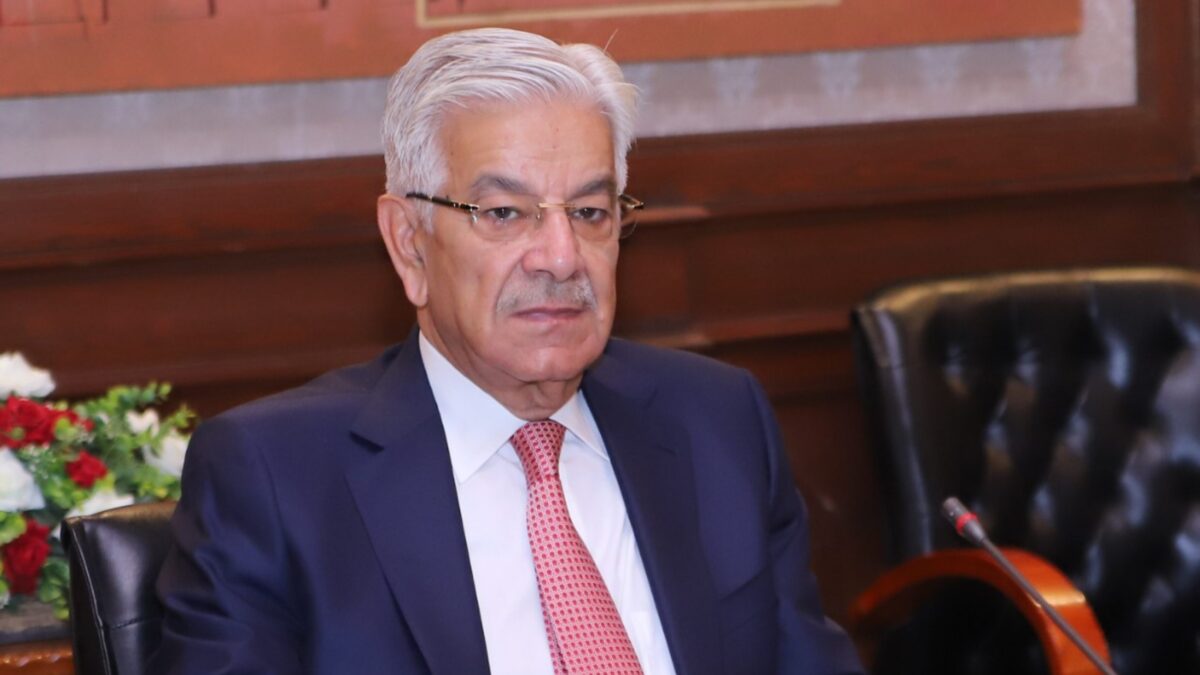
In recent days, the explicit remarks of Khawaja Muhammad Asif, Pakistan`s Minister of Defense, before the National Assembly, revealed a bitter reality long concealed beneath layers of ideological narratives. Asif acknowledged that Pakistan`s involvement in Afghanistan`s conflicts was driven not by religious motivations or jihad, but by the pursuit of political legitimacy and the desire to secure the support of global powers-particularly the United States. This rare admission, in which Pakistan described itself as a "rentier" of foreign wars, provides an opportunity for a deeper analysis of how Afghanistan and its people were sacrificed in the cycle of aggressive great-power policies. For more than four decades, Afghanistan has been entangled in proxy wars, repeatedly exploited as a geopolitical battleground by powers such as the former Soviet Union, the United States, Pakistan, and even India. Its people have paid the heavy price of these rivalries in blood, poverty, and displacement. A Geopolitical Project of the Powers There is no doubt that the majority of Afghans, guided by firm religious convictions, sincerely rose in jihad against the invasion of the former Soviet Union, believing they were acting in obedience to God and Islam. However, particularly after the expulsion of the Red Army, leaders of jihadist factions prioritized personal, partisan, and ethnic interests over religious guidance and national welfare. By aligning themselves with foreign agendas, they contributed to Afghanistan`s further destruction. Among external actors, Pakistan-acting in alignment with the United States-played one of the most damaging roles in Afghanistan`s wars. As Asif emphasized in his remarks: "Our work was not (assisting) jihad. This was a superpower`s war." During the Cold War, in order to align with the United States, Pakistan altered its educational system and expanded religious seminaries to cultivate extremists-a program that has never been fully reformed. This policy not only ideologically radicalized Pakistani society but also transformed Afghanistan into a training and deployment ground for takfiri militants. The consequences were catastrophic: the destruction of Afghanistan`s infrastructure, the deaths of millions, and massive waves of migration. Ordinary Afghans-often simple farmers and herders-became victims of a geopolitical contest. Their villages were bombed, their economy shattered, and those who survived formed generations of children who grew up amid war without access to education. What was imposed on Afghanistan from the 1980s onward, by the formal admission of Pakistan`s defense minister, was nothing less than a proxy war between superpowers. Afghanistan became the frontline of the Cold War without having either a choice or a voice in the grand strategic equation. During this period, Pakistan-supported financially and militarily by the United States and Saudi Arabia-played a central role. Yet while this support granted Pakistan political legitimacy, it reduced Afghanistan to ruins. The Soviet withdrawal in 1989 did not end the conflict; rather, it ushered in a new phase of internal warfare that ultimately brought the Taliban to power-a movement itself born out of Pakistani religious seminaries. A "Rented" Pakistan and the Continued Victimization of Afghanistan One of the most significant elements of Asif`s remarks was his explicit acknowledgment that Afghanistan had no role in the September 11 attacks. Nevertheless, the country once again became the victim of decisions made in Washington, Islamabad, and other capitals. Afghanistan did not carry out September 11, nor were the perpetrators Afghan; yet its territory became the stage for the longest war in American history. Pakistan, according to its own defense minister, "rented itself out for two decades" to maintain U.S. support. In the process, it was the Afghan people who were bombed, displaced, and repeatedly stripped of what little they possessed. This alignment included allowing Pakistani territory to be used for military operations, arms transfers, and even drone strikes. But the primary cost was borne by Afghans: more than twenty years of continuous war, hundreds of thousands of civilian deaths, and economic devastation that has left Afghanistan among the poorest countries in the world. An analysis of this period demonstrates that aggressive policies were driven not only by the United States but also by Pakistan. In order to preserve strategic influence in Afghanistan and counter Indian influence, Pakistan supported militant groups such as the Haqqani Network-an allegation repeatedly raised by the United States. Such support perpetuated violence in Afghanistan, where civilians were trapped in the crossfire of proxy wars. Afghan women, whose rights were stripped away during the first Taliban regime, experienced renewed hope during the U.S. presence. However, the sudden American withdrawal in 2021 once again returned them to a harsher reality. A Fractured Society and an Uncertain Future Asif`s remarks also addressed social consequences: "We reshaped society, politics, and religion to conform to that so-called jihad." This transformation affected not only Pakistan but, above all, Afghanistan as the principal victim. Religious extremism emerging from Pakistani seminaries contributed to the rise of the Afghan Taliban and groups such as Tehrik-e-Taliban Pakistan (TTP). Today, Asif complains about the Afghan Taliban`s lack of cooperation against the TTP, stating that they do not provide security guarantees-while United Nations reports confirm the TTP`s presence in Afghanistan. This situation reflects a vicious cycle: major powers such as the United States and Pakistan use Afghanistan as a tool for geopolitical objectives, and when their interests are exhausted, they abandon it. India, too, plays a role in this equation. Through development investments aimed at countering Pakistan`s influence, regional rivalries have frequently come at the expense of Afghanistan`s security. As a result of these power struggles, Afghanistan-a country of over 30 million people-now has more than half its population living below the poverty line, millions of refugees, and an economy dependent on foreign aid that is often suspended. Conclusion: Apology Requires Reparations Asif`s acknowledgment, including his personal apology for past mistakes, represents a rare step toward accepting responsibility. "Until we admit our mistakes, nothing will improve," he stated. Yet a personal apology from Pakistan`s defense minister-however morally uncommon-is insufficient for a wounded nation. Admission without legal, political, and historical accountability does nothing to alleviate the suffering of victims. Afghanistan continues to pay the price for misguided policies adopted by others for their own interests. Unless the role of governments in the destruction of this country is formally acknowledged and mechanisms for reparations and accountability are established, the cycle of victimization will persist. Major powers must cease their aggressive policies and allow Afghanistan to progress as an independent state. The Afghan people, who have endured decades of suffering, deserve peace, development, and sovereignty. Without genuine acknowledgment of past errors and an end to proxy warfare, the cycle of violence will continue and Afghanistan will remain a victim. The time has come for powers to shift from exploitation to reconstruction and economic support-not for their own benefit, but for the people of Afghanistan-so that at least a fraction of the forty years of injustice inflicted upon them may be redressed. This is not a plea for charity; it is a demand for accountability and compensation for the devastation that has reduced Afghanistan to ruins over four decades.
By: J-S
|
 |
|
|
|
U.S
Afghanistan
Iran
International
Social
Economic
Articles |
Athletic
Read
Science
Medical
Interview
Art and Culture
Travel |
|